Picked for you

Affordable price

Esclusively on Nuturally


Your cart is empty

Fill it with nuts!
Nuturally is a Euro Company SpA Società Benefit brand
Free shipping for orders above 59€. Right of withdrawal from your order in accordance with Directive 2011/83/EU within 14 days of delivery.
Secure payments with PayPal, Credit cards/Prepaid cards. Minimum order value: 29€.
Food safety with over 2,000 raw material controls
Picked for you
Affordable price
Esclusively on Nuturally
Buy online peeled pistachios with no added salt and no preservatives.
We selected the best raw peeled pistachios with respect for quality agriculture and our supply chain.
Our peeled pistachios are ready made because without skin, which makes them perfect for both savoury and sweet recipes and for making a delicious 100% pistachio cream.
You can buy peeled pistachio in packs of 500 g, ideal for true nut lovers.
Discover the benefits of peeled pistachios with no added salt. Our nutritional analyses have shown that 100 g of peeled pistachios contain:
Ingredients: PISTACHIOS. May contain PEANUTS and other NUTS.
Formats: 500 g
Origin: Iran, USA

Nutritional values
| Ingredients | PISTACHIOS. May contain PEANUTS and other NUTS. |
| Weight | 500g |
| Storage requirements | Store in a cool, dry place |
| Nutrition declaration | average nutritional values per 100 g: |
| Energy | 2504 kJ / 605 kcal |
| Fats | 51 g |
| of which saturates | 5.3 g |
| Carbohydrate | 8.8 g |
| of which sugars | 6.0 g |
| Fibre | 9.5 g |
| Protein | 23 g |
| Salt | 0.01 g |
| Phosphor | 464 mg (66% NRV*) |
| Copper | 0.71 mg (71% NRV*) |
| Vitamin E | 8.7 mg (73% NRV*) |
| Source | Euro Company analysis |
| Recommendations | The advice provided SHOULD IN NO WAY BE CONSIDERED AS MEDICAL ADVICE OR PRESCRIPTION. The information provided shall be considered for informative and educational purposes only, it is not intended to replace medical advice. In case of a medical condition, always consult your doctor. |
| Origin | Iran, USA |
| Nutrients | Copper, Phosphorus, Vitamin E |
| Label and packaging | The images are for illustrative purposes only, the product may be subject to changes depending on stock availability and selected weight. |
| Product | Pistachios |
Curiosity
Pistachio provides an oil used in confectionery, as well as in cosmetics for its emollient qualities.
In Sicily, pistachio bark is used as a freshner. Legend has it that king Nebuchadnezzar grew pistachios in the hanging gardens of Babylon for his wife Amytis, while Emperor Vitellius introduced pistachios to Rome in the 1st century AD.
Pistachio was included in a book of typical Roman recipes from the early Empire by Marcus Gavius Apicius.
Source:
Nuts Book
History
Pistachio cultivation is very old: some archaeological findings have shown it has been used since the 7thmillennium BC in Turkey.
The pistachio plant is native to Syria but according to some studies the area of its initial cultivation also includes Asia Minor, Palestine and Turkmenistan. The name "pistachio" comes from Persian pesteh and Arabic fustaq, which are two onomatopoeic names and recall the sound of the opening of the shell when the pistachio is ripe.
Pistachio is mentioned in the Bible, when it is said that Jacob sent several fruits as tribute to Pharaoh, including pistachios. Pistachio was also known to the Assyrians, Persians and Greeks as a medicinal drug. It was brought to Rome in 30 AD and later spread to Spain. Pistachios were then gradually spread to China and Caucasian Russia, and have been spreading for about a century in the United States of America, where the plant was introduced by the Office of Foreign Seed and Plant Introduction.
The largest producer of pistachio is Iran, followed by the United States. Then come Turkey, China, Syria, Greece, Italy, Afghanistan, Pakistan and India. Iran alone accounts for half of the world's production, while California accounts for about 20%. American pistachios are consumed mainly in the domestic market, while Iranian pistachios are especially traded in the European market. Turkish and Syrian pistachios are very good, but consumed almost exclusively in the domestic market, where the product is sold fresh and used for oil production.
Source:
Nuts Book
Selection
Peeled pistachios Online
We want to nurture your love for raw peeled pistachios. Among many peeled pistachios available to buy, as nut experts we have selected peeled pistachios that are grown with respect for our supply chain.
Where to buy peeled pistachios?
Peeled pistachios are only to be found on our online nut shop and nowhere else offline. This is the only way we can provide you with quality, peeled pistachios from our supply chain, available in large packs at an affordable price.
Properties
According to our analyses, 100 g of peeled pistachios contain:
Affordable price
For us, an affordable price means offering peeled pistachios that are accessible to everyone.
We select our producers based on our values to offer you only natural nuts and dried fruit with no added sugar (contains naturally occurring sugars). What’s more, by choosing larger pack sizes of peeled pistachios, you too are helping to reduce plastic use, as larger packs require less packaging per kilogramme of product than smaller ones.
How much does 1 kg of peeled pistachios cost?
The price per kg for peeled pistachios depends on the pistachios' quality, origin and variety. On Nuturally, we have selected the best peeled pistachios with respect for our supply chain, farmers, and raw materials.
Storage
You can store peeled pistachios in cool, dry places away from heat and moisture. Here are 4 useful tips:
Questions & Answers by lovers of Peeled Pistachios
FAQ about Peeled Pistachios: Questions & Answers by nut lovers
Be the first to ask a question about this product!
Products of the month
We recommend that you buy Peeled Pistachios together with these products:
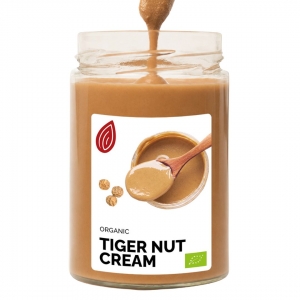
Try right away our tiger nut cream made with only organic tiger nuts and no added sugar.
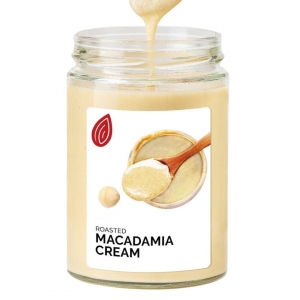
Show productTry the rich texture and an intense aroma of our Macadamia cream, made with gently roasted macadamia nuts.
Show product